


Patrika Timeline
From 1956 to the present: the story of the newspaper with a soul.

The First Decade: 1956 to 1965
Beyond The Boundaries- 7 March 1956
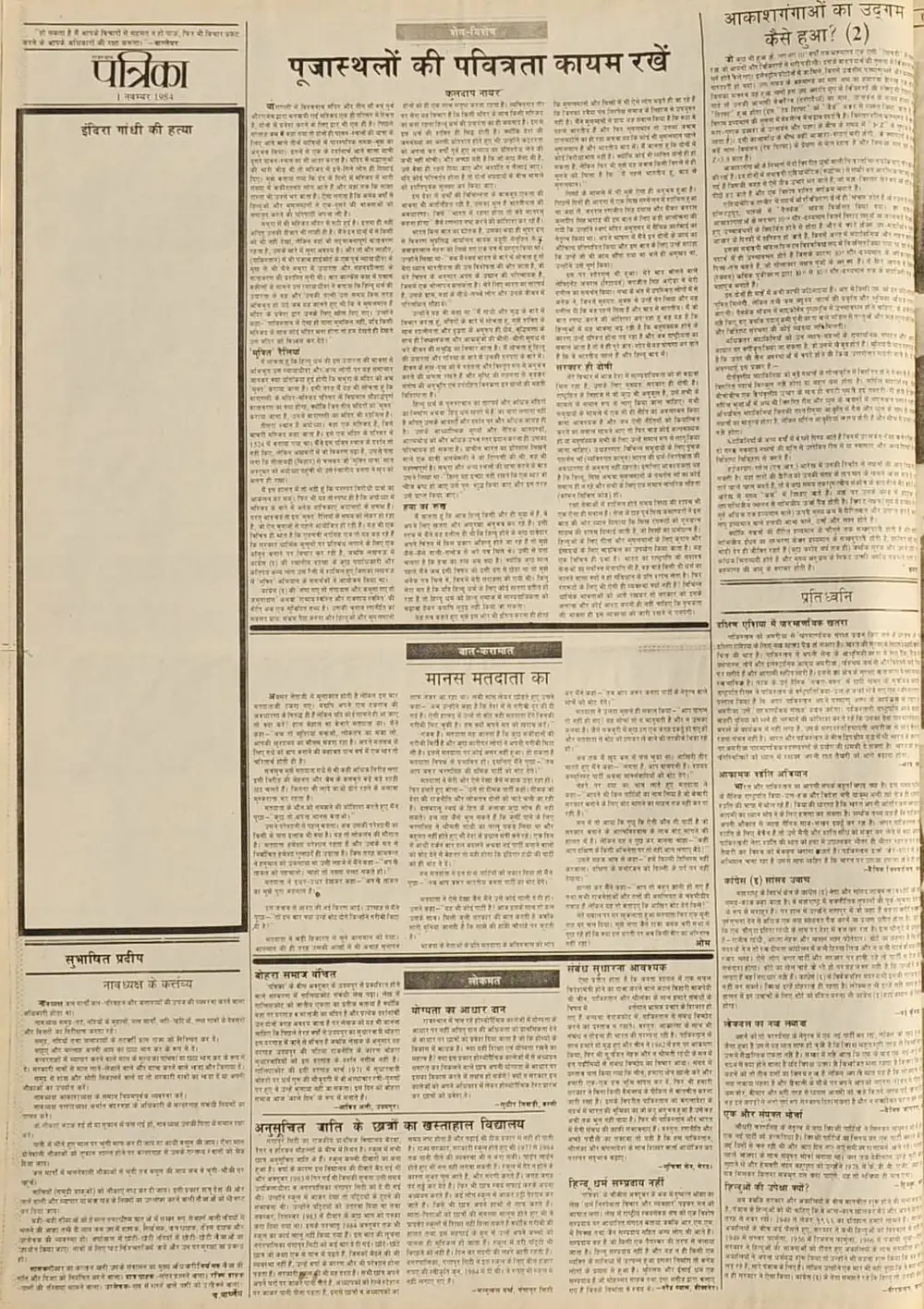
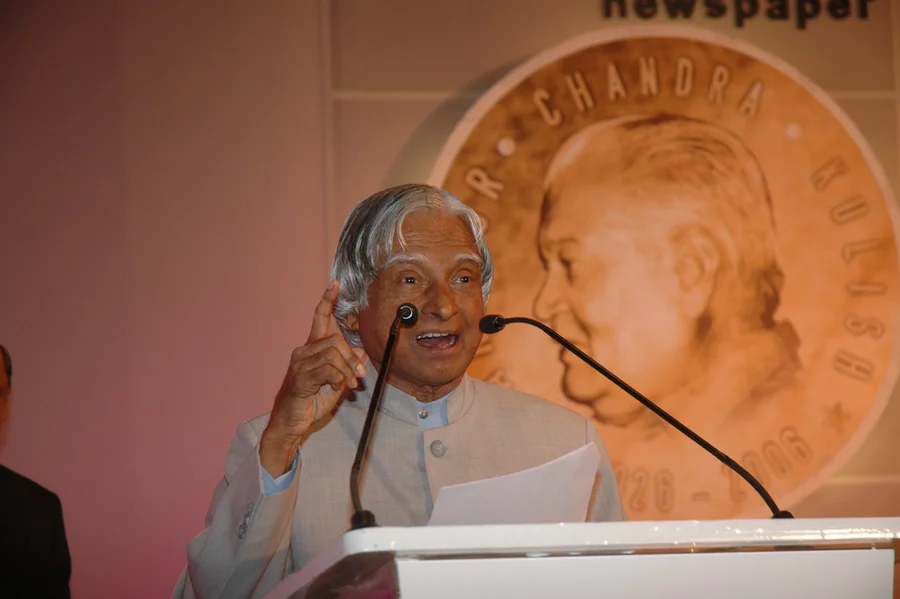
The Patrika Group was established by Karpoor Chandra Kulish in 1956. Kulish was deeply conscious, not only about journalism but also about press freedom. The day he felt, while working as a journalist, that his pen was not free and his constitutional right to freedom of speech was being violated, he resigned from his job. That very day, he laid the foundation of ‘Rajasthan Patrika.’
In his autobiography ‘Dhara Prawah,’ he wrote, “I could not tolerate this restriction. I sent my resignation letter in protest. It settled in my mind that if there is a newspaper, it should be one where no compromises are made.”
English newspapers dominated the daily newspaper space at the time. Kulish began Rajasthan Patrika, the first evening daily newspaper in Jaipur, with borrowed capital of just five hundred rupees, and March 7, 1956 was written in golden letters in the history of Indian journalism.
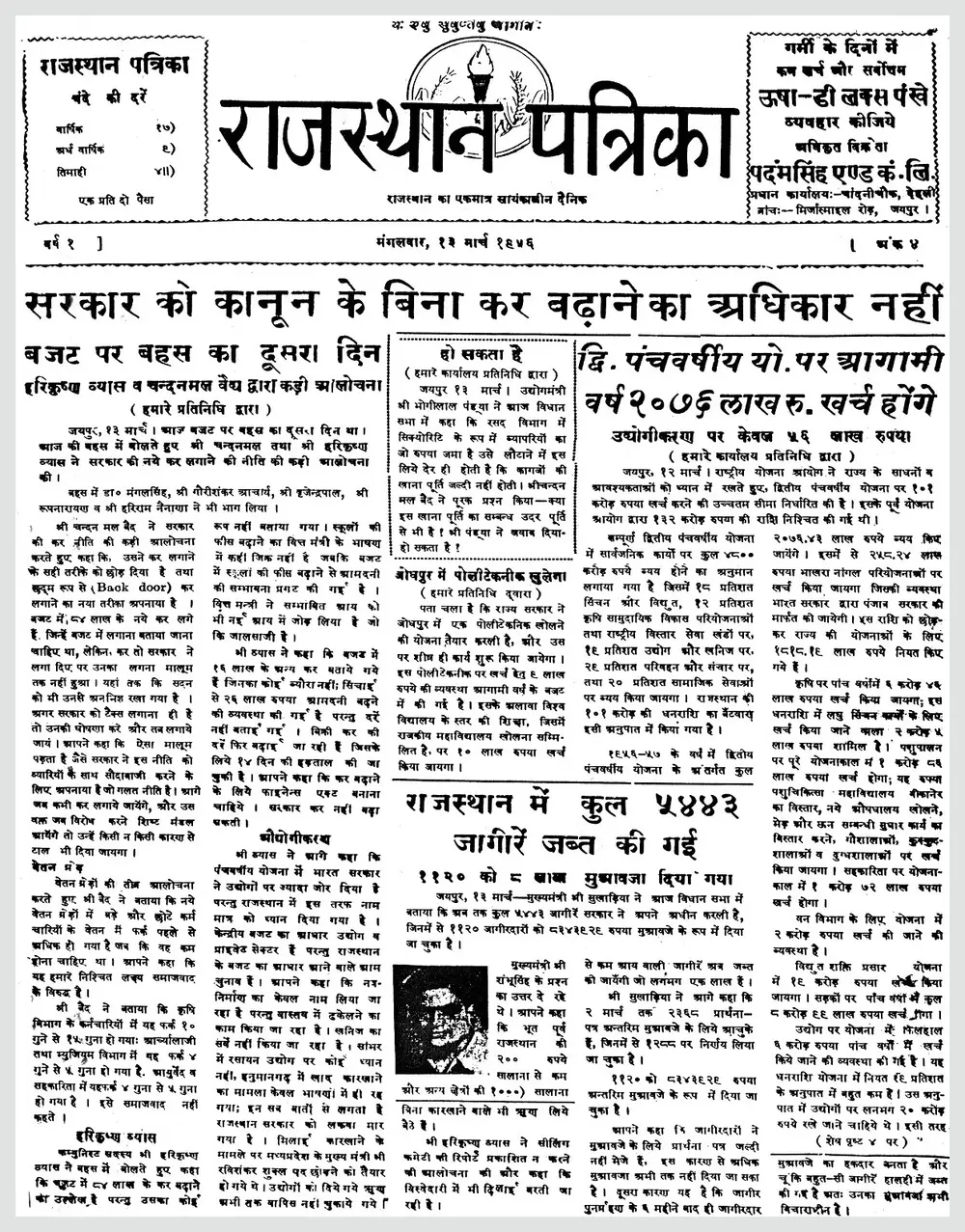
- 13 March 1956
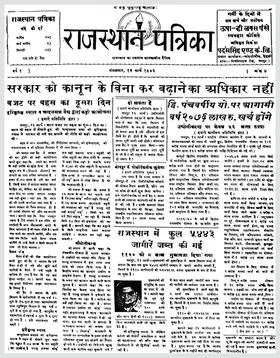
The headline of the March 13, 1956 edition read: “Government does not have the right to increase taxes without law,” from the second day of the Rajasthan Government’s budget session. The Central Government’s campaign for the abolition of the Jagirdari system was given two columns on the front page, aligning the paper with democratic values and equality.
- 1956 to 1958
In its early years Jaipur witnessed three major public movements, all actively covered by the paper: a student movement against increased school fees, the 1957 anti-tax increase movement, and the 1958 movement against abolishing the Rajasthan High Court bench in Jaipur. When the press owner printing Patrika refused to continue over its stance, alternative arrangements were made and publication continued uninterrupted.
- 1960
As demand outgrew rented presses, Patrika secured a loan of fifteen thousand rupees from the state government and purchased an old cylinder and treadle machine, shifting printing to its own press.
- 1962
During the general elections the newspaper expanded to four pages. Its February 26, 1962 edition accurately predicted that the Congress Party would secure only a nominal majority in Rajasthan.
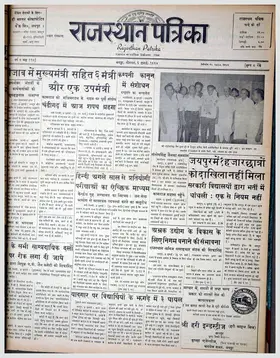
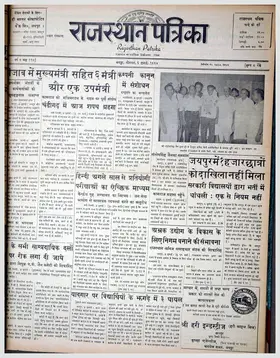
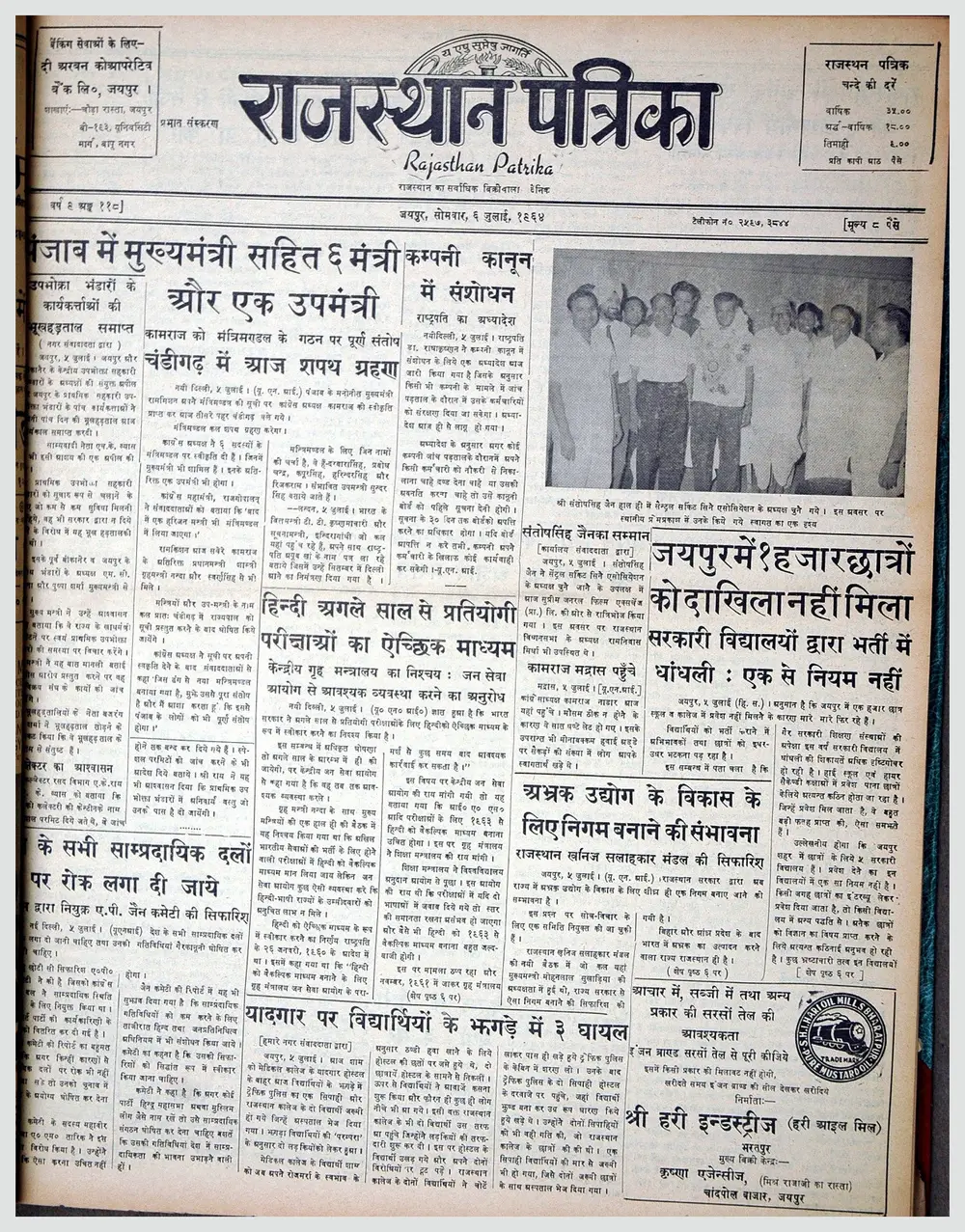
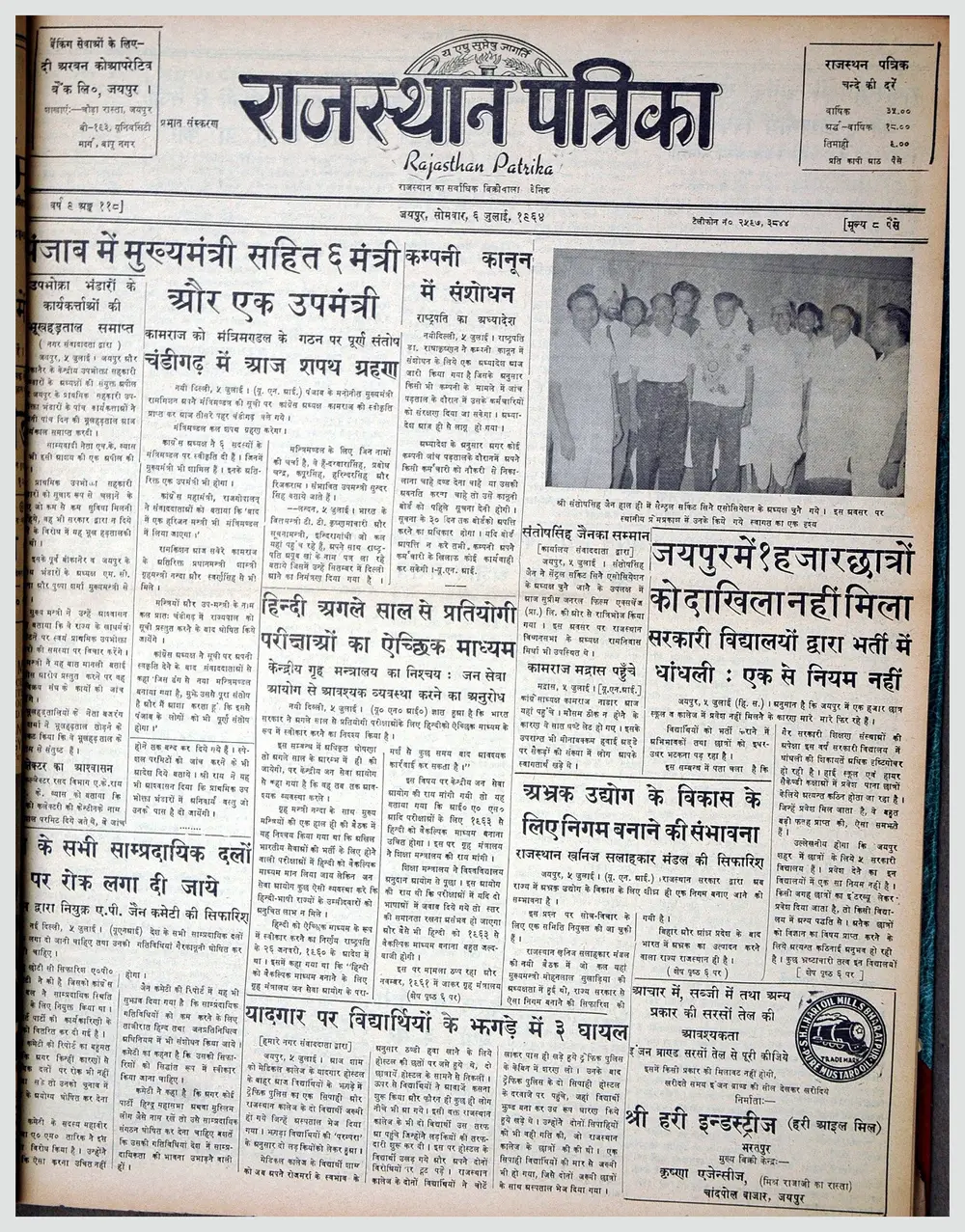
- 5 May 1964
Rajasthan Patrika became a morning daily in its current format. Waiting for the Patrika became part of the daily routine for Rajasthan’s people.
- 1965
Its coverage of the India–Pakistan war stirred such patriotism in Jaipur that citizens began raising funds for the nation. That year Patrika began printing with an automatic machine, introducing eight-column sheets.
The Second Decade: 1966 to 1975
From The Country to Rural Journalism- 1966
Patrika reached new homes and readers, increasing its circulation to seven thousand copies, while advertising strengthened its finances.
- 1967
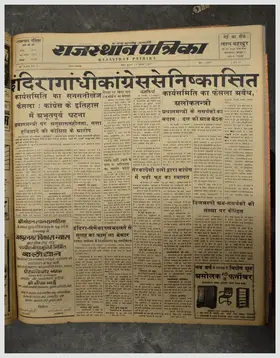
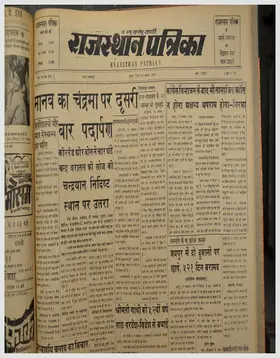
To maintain impartiality through the general elections, Rajasthan Patrika endured neglect from the state government but never compromised its journalistic ethics.
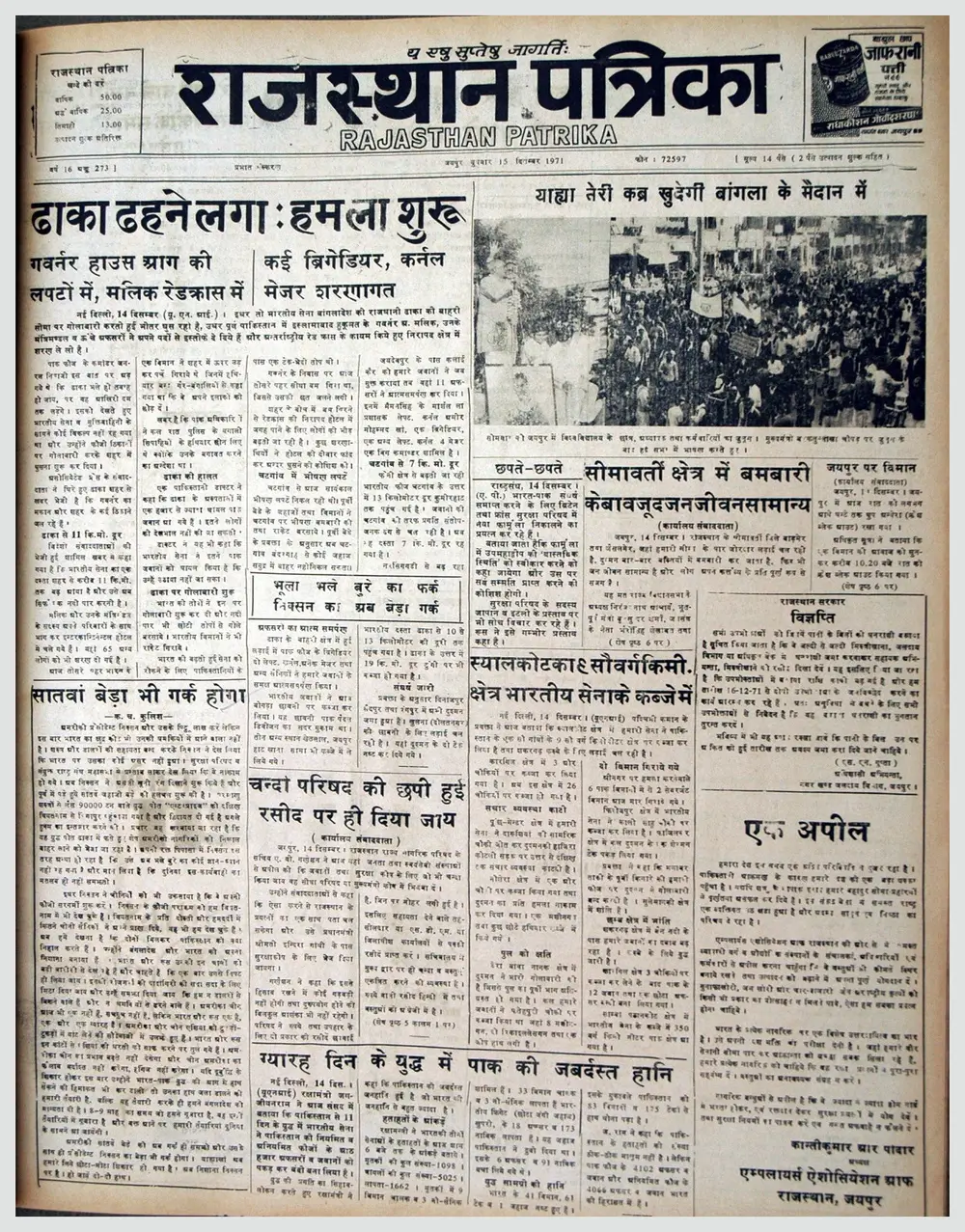
- 15 December 1971
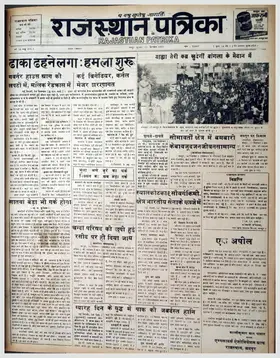
The issue had already hinted at India’s victory in the war, under the headline “Dhaka started collapsing.” On the same page Kulish wrote the editorial “Seventh Fleet Will Be Gark” (sunk), criticising the superficial friendship between the United States and China against India and predicting it would not last.
- 1972
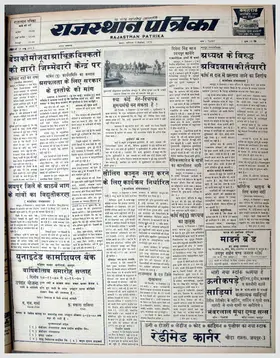
Patrika installed Rajasthan’s first high-speed newspaper printing machine, the Storio Rotary Machine, and became a member of the Audit Bureau of Circulations (ABC).
- 1973
Itwari Patrika began generating interest among readers across all sections.
- 13 June 1975
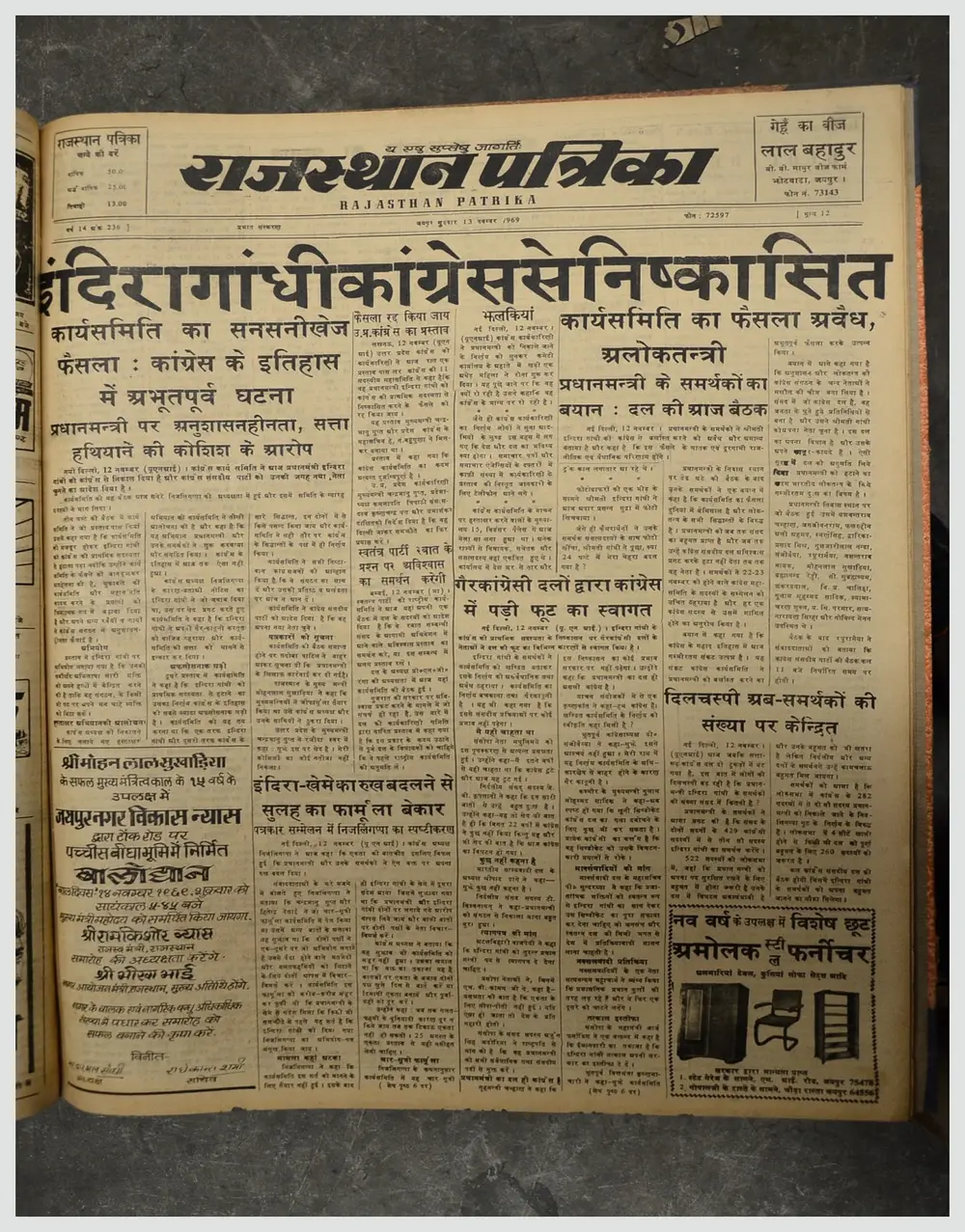
A day after the Allahabad High Court declared Prime Minister Indira Gandhi’s 1971 election illegal, Kulish wrote the front-page editorial “Najuk Daur” (Critical Phase), asserting the judgment would enhance respect for the judiciary and strengthen faith in democracy. He wrote five signed editorials between June 12 and June 25, 1975.
- 25 June 1975
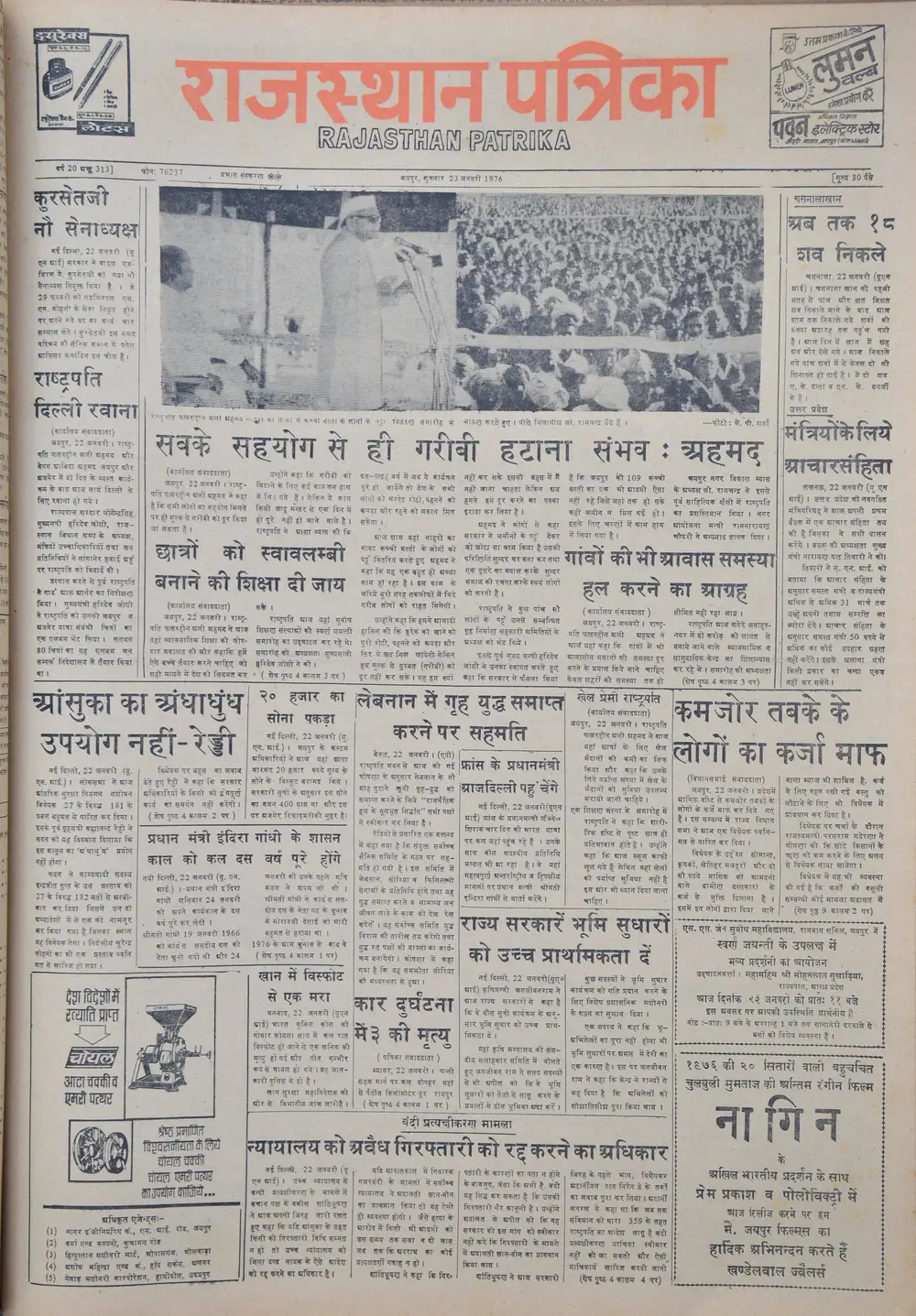
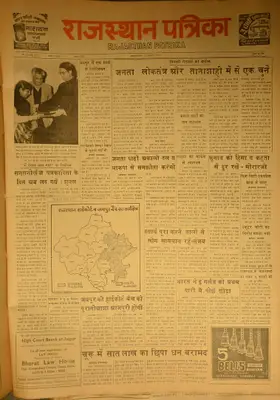
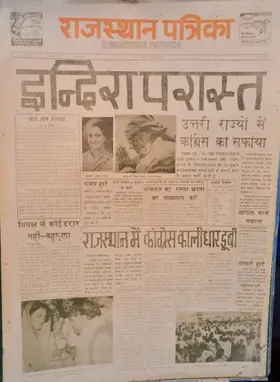
Through the 21-month Emergency, Kulish travelled the villages of Rajasthan for seven months, writing more than 150 articles in the series “Main Dekhta Chala Gaya” (I Kept Observing) that critically examined government schemes despite censorship. Rajasthan Patrika’s circulation nearly doubled.
The Third Decade: 1976 to 1985
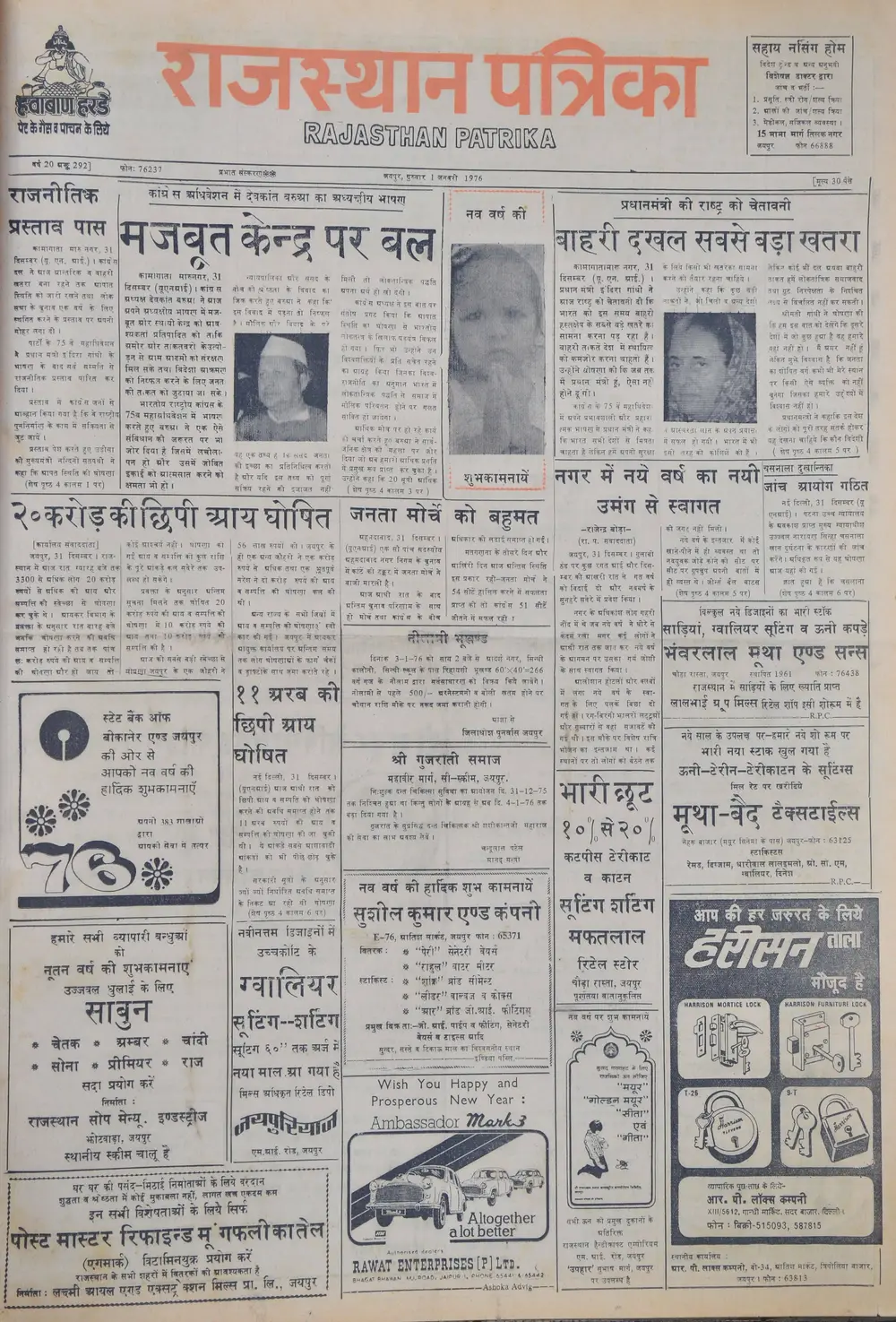
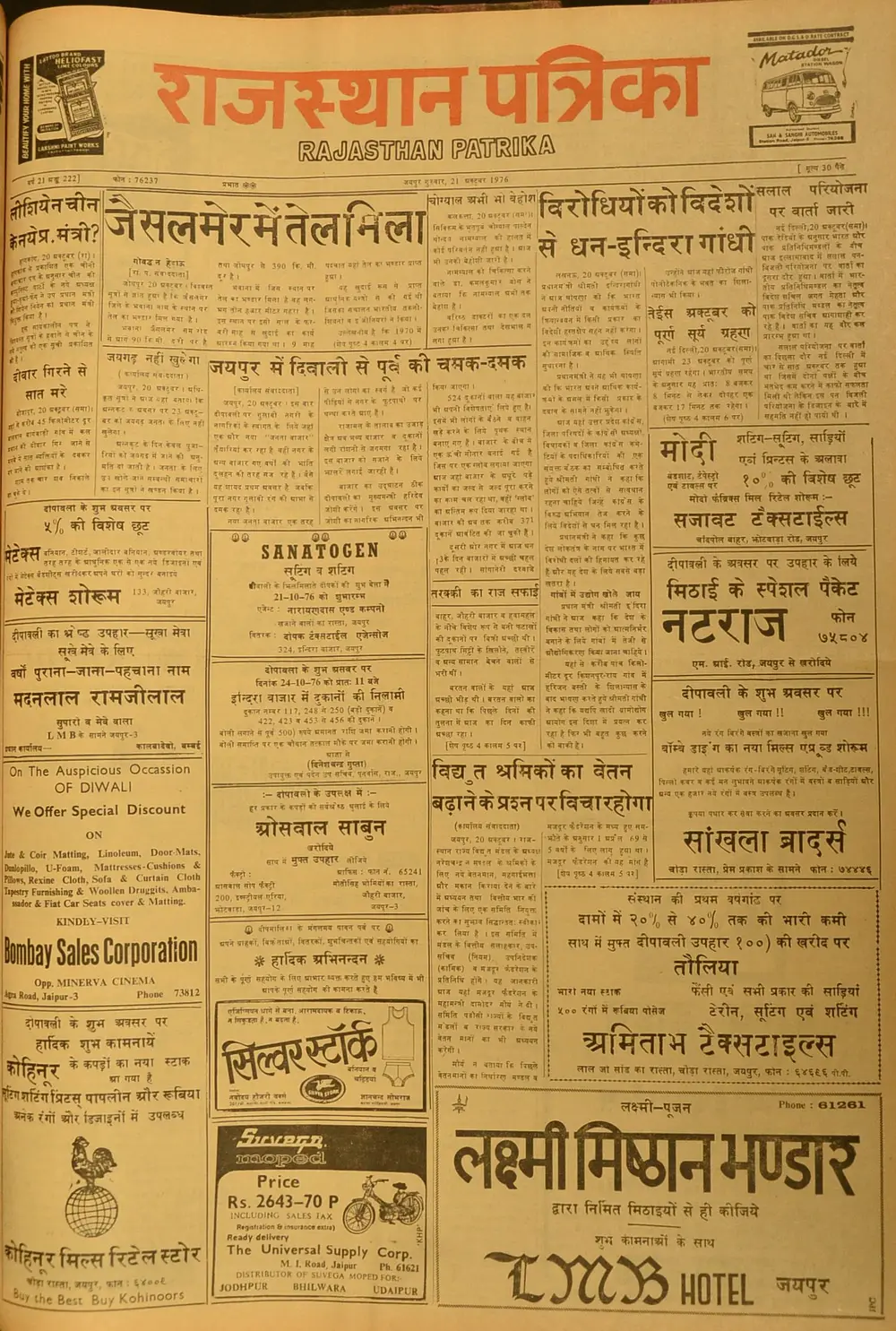
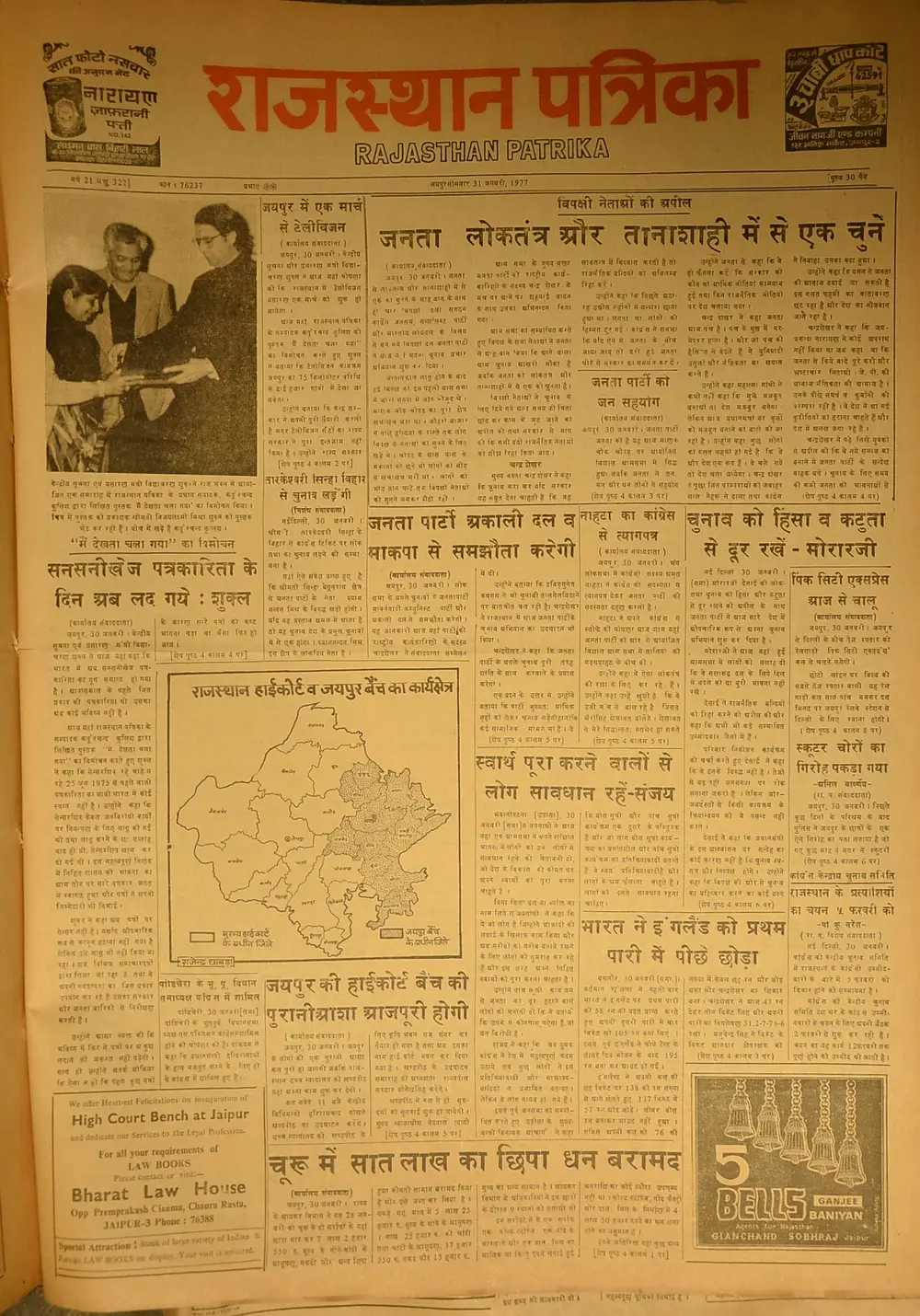
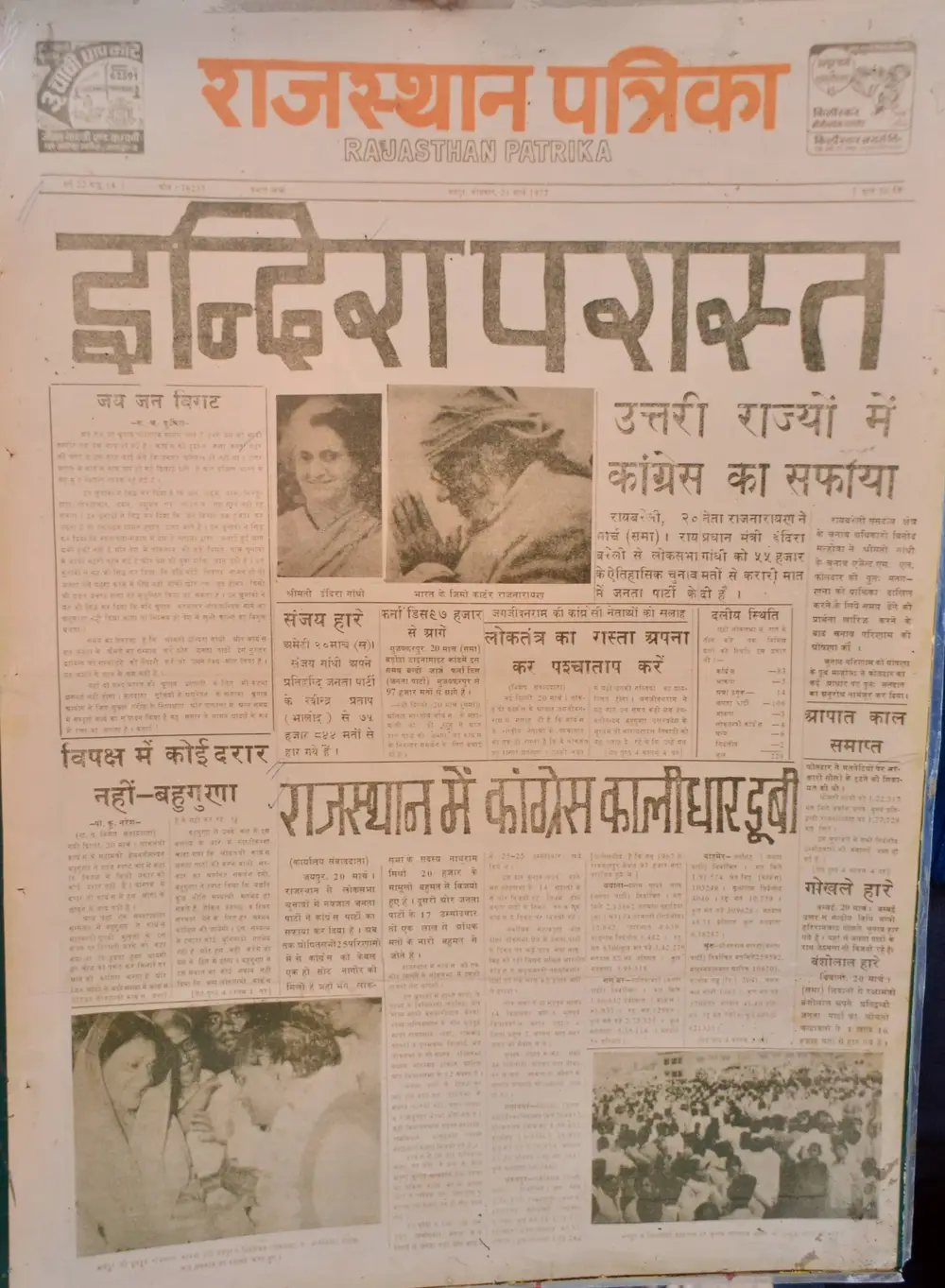
- 1976 to 1977
Circulation kept climbing beyond what the 1962-model stereo rotary machine could print.
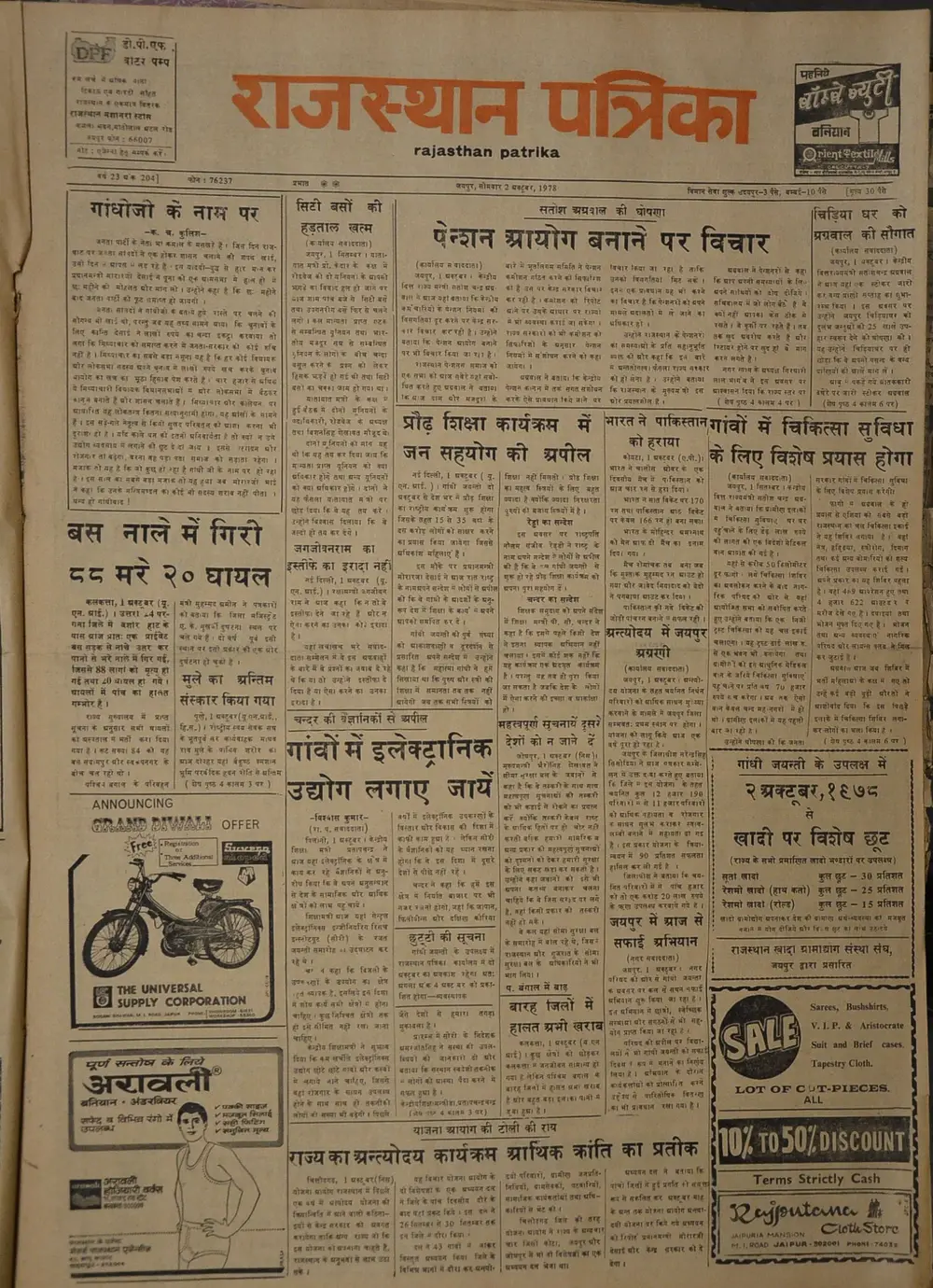
- 1978
Rajasthan Patrika began selling 80,000 copies, delivered from Jaipur across an area of about 3,42,000 square kilometres.
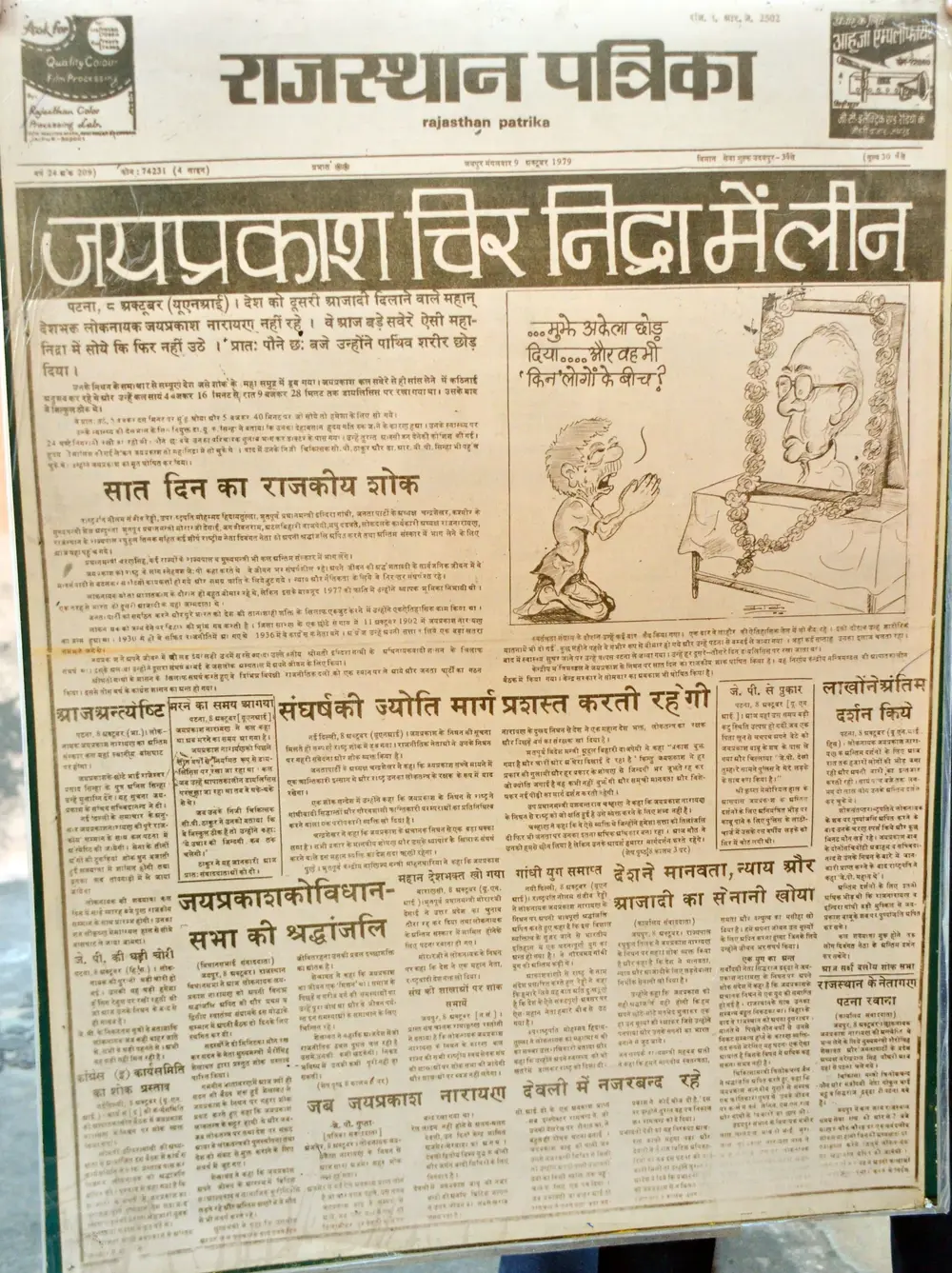
- 1979
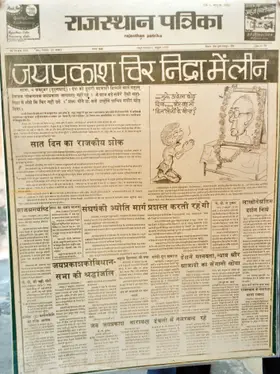
Patrika pioneered offset printing with indigenous machines. In December a regional office opened in Jodhpur with its own edition, and the paper moved to its present headquarters at Kesargarh, Jawaharlal Nehru Marg.
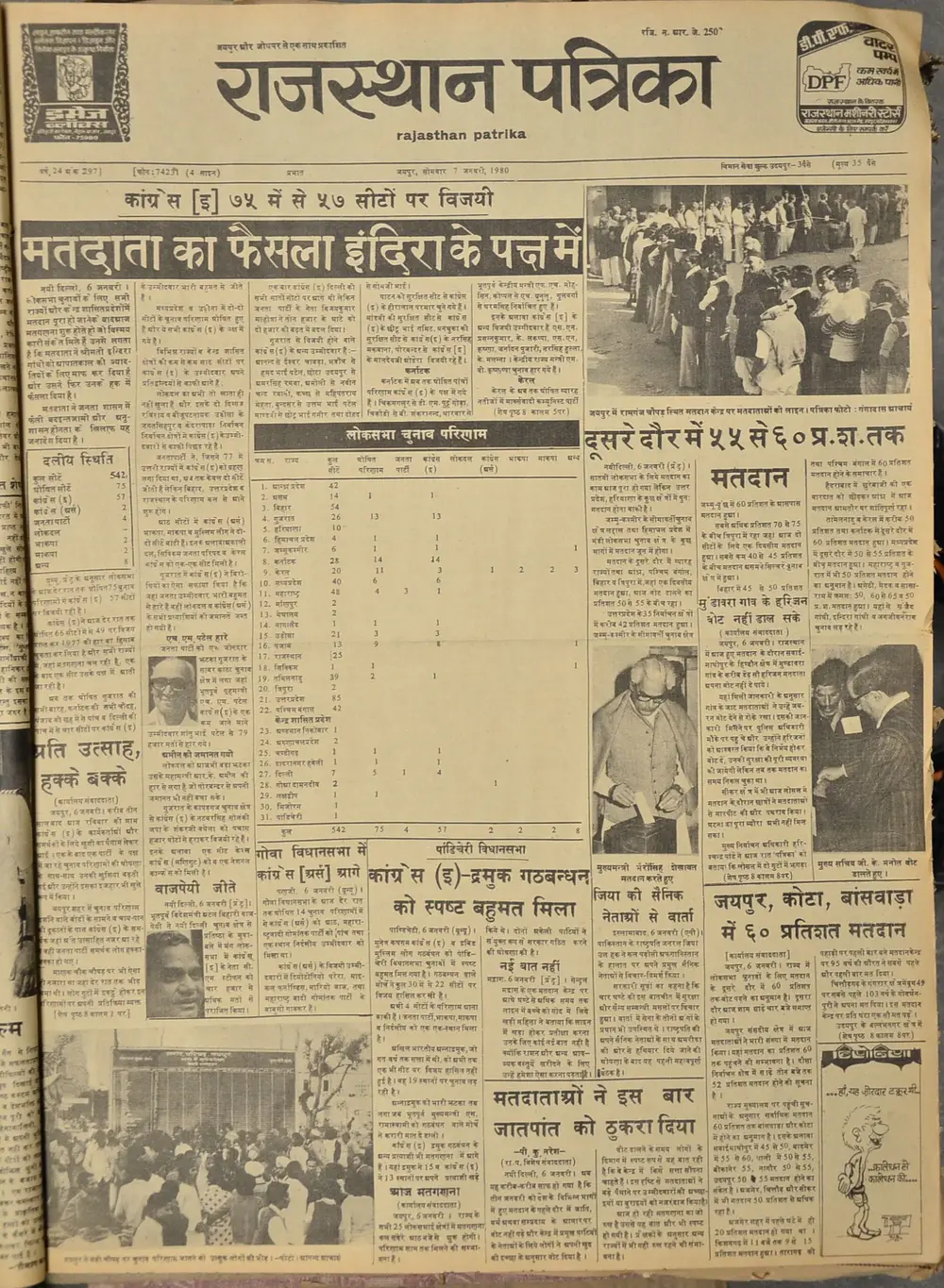
- 1980
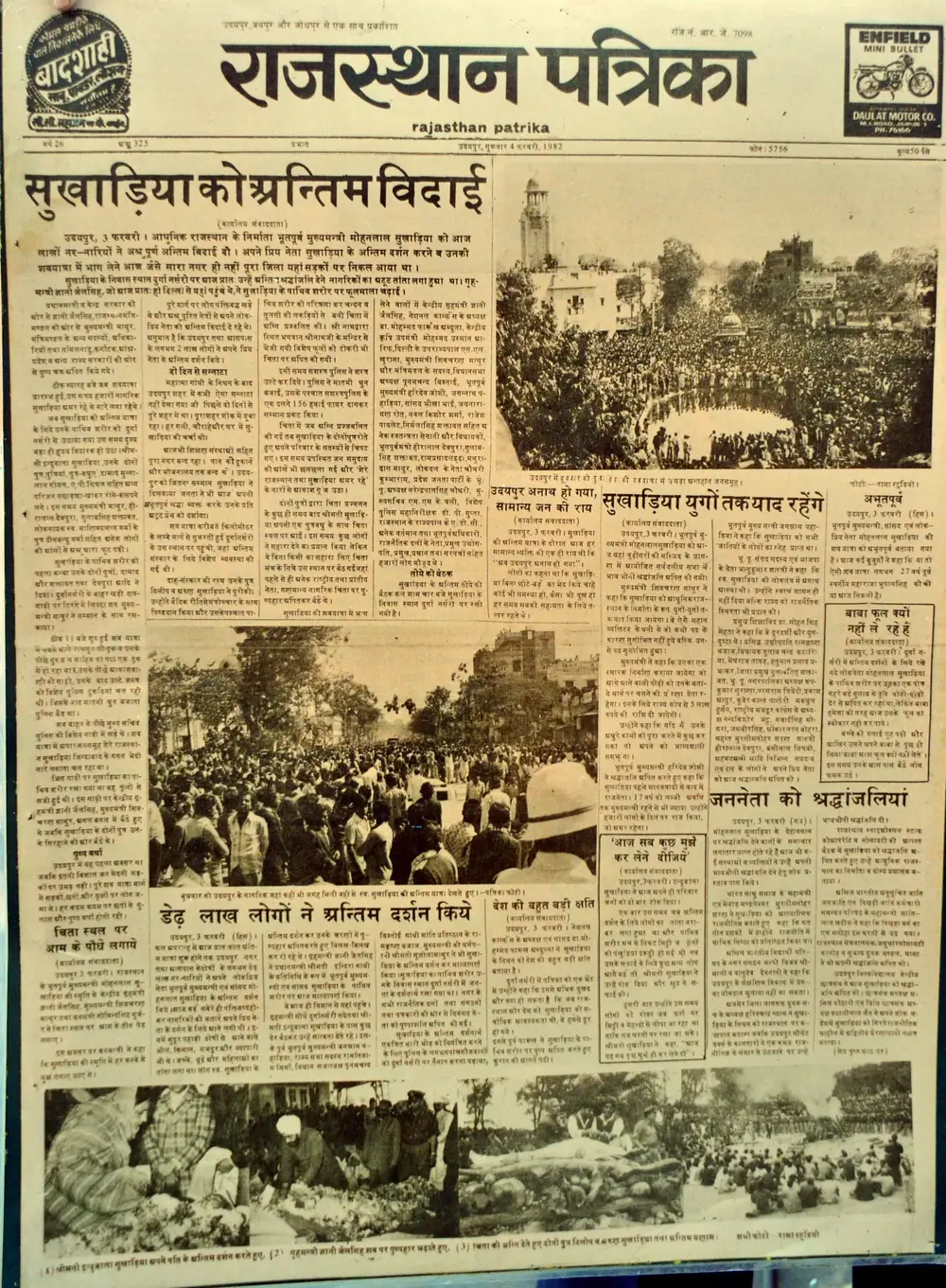
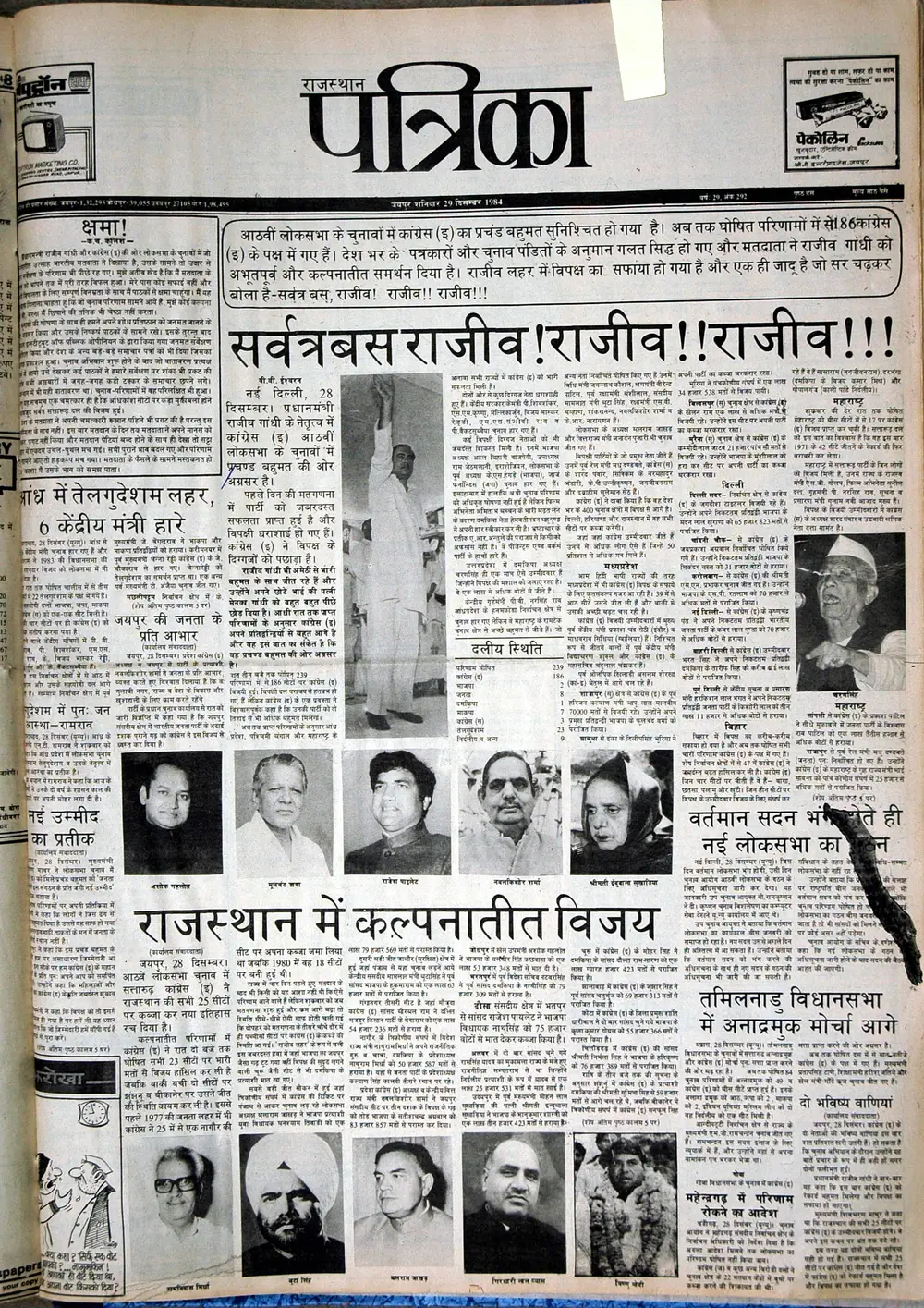
In February 1982, President Neelam Sanjiva Reddy awarded Rajasthan Patrika, Jodhpur and its printer at the 22nd National Ceremony for excellence in printing and artistry, for 1980.
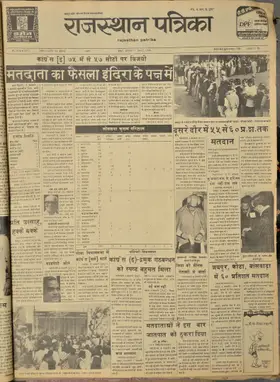
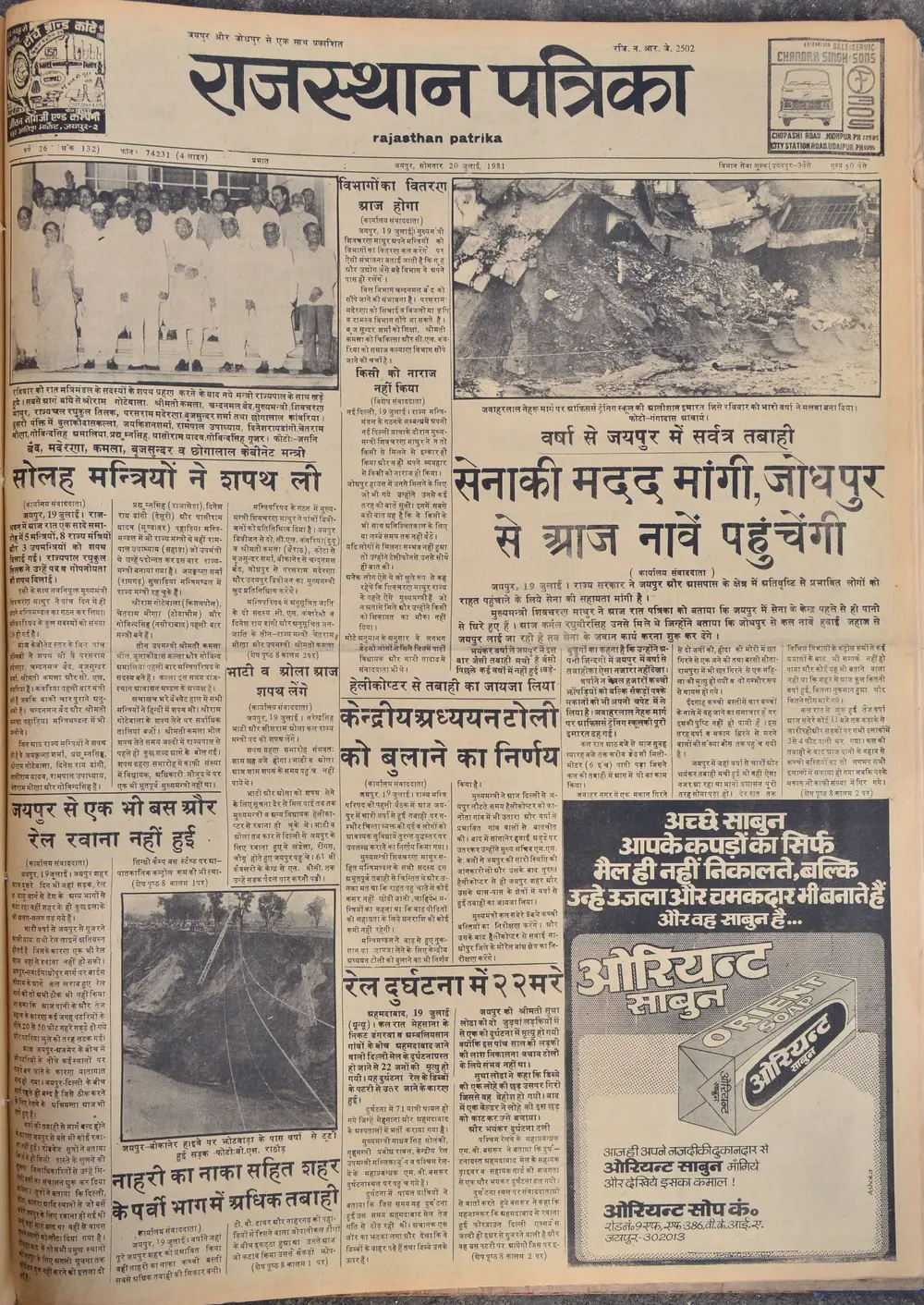
- 1981
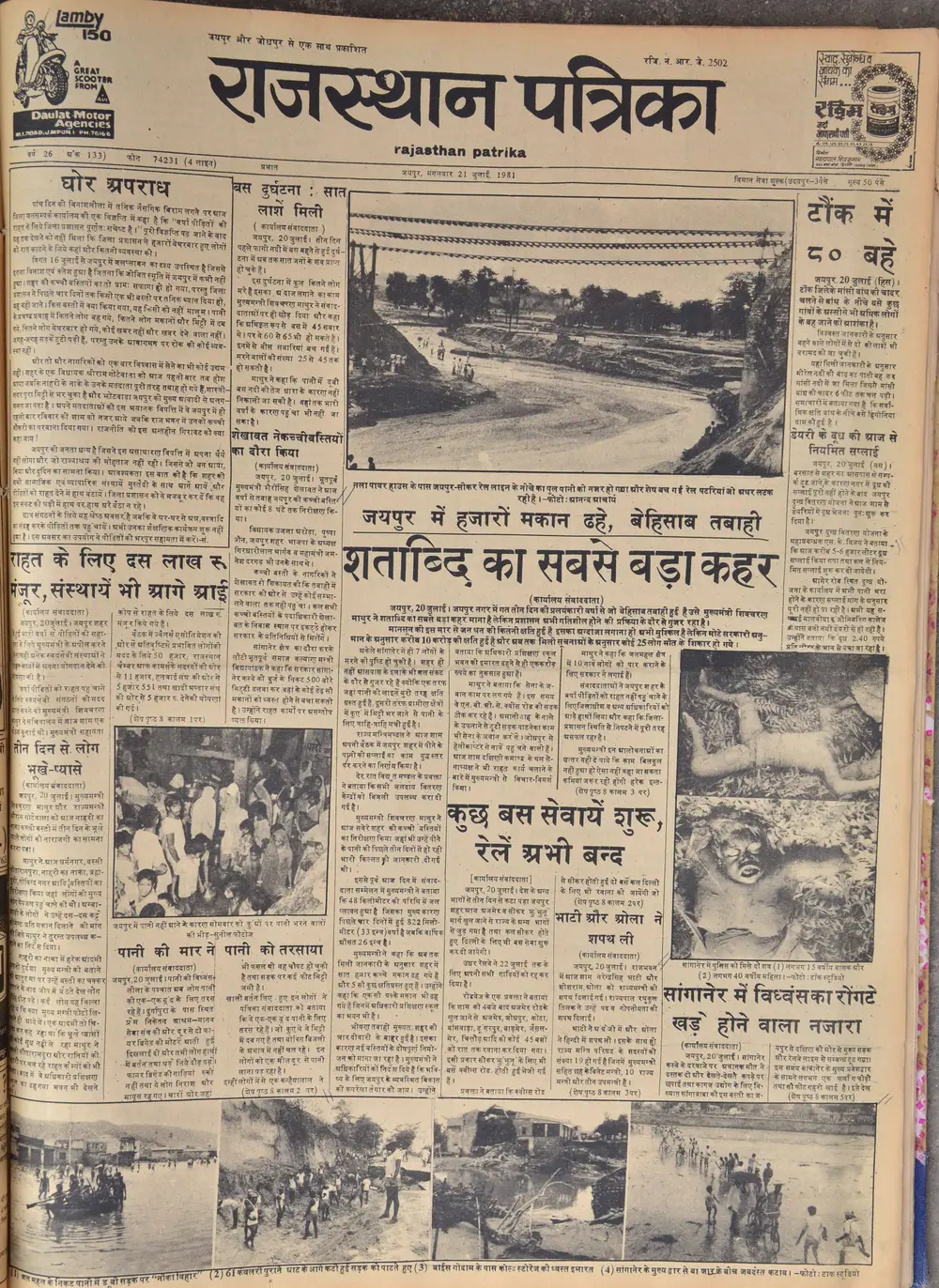
Rajasthan Patrika (Jodhpur) won the Ministry of Information and Broadcasting’s first prize for printing and decoration.
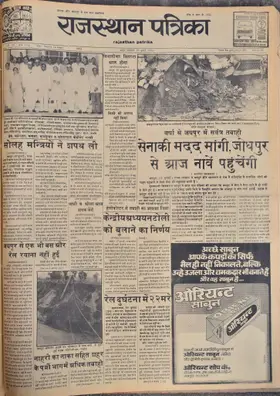
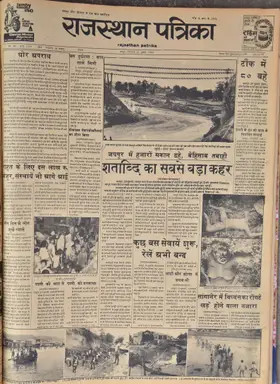
- 1983
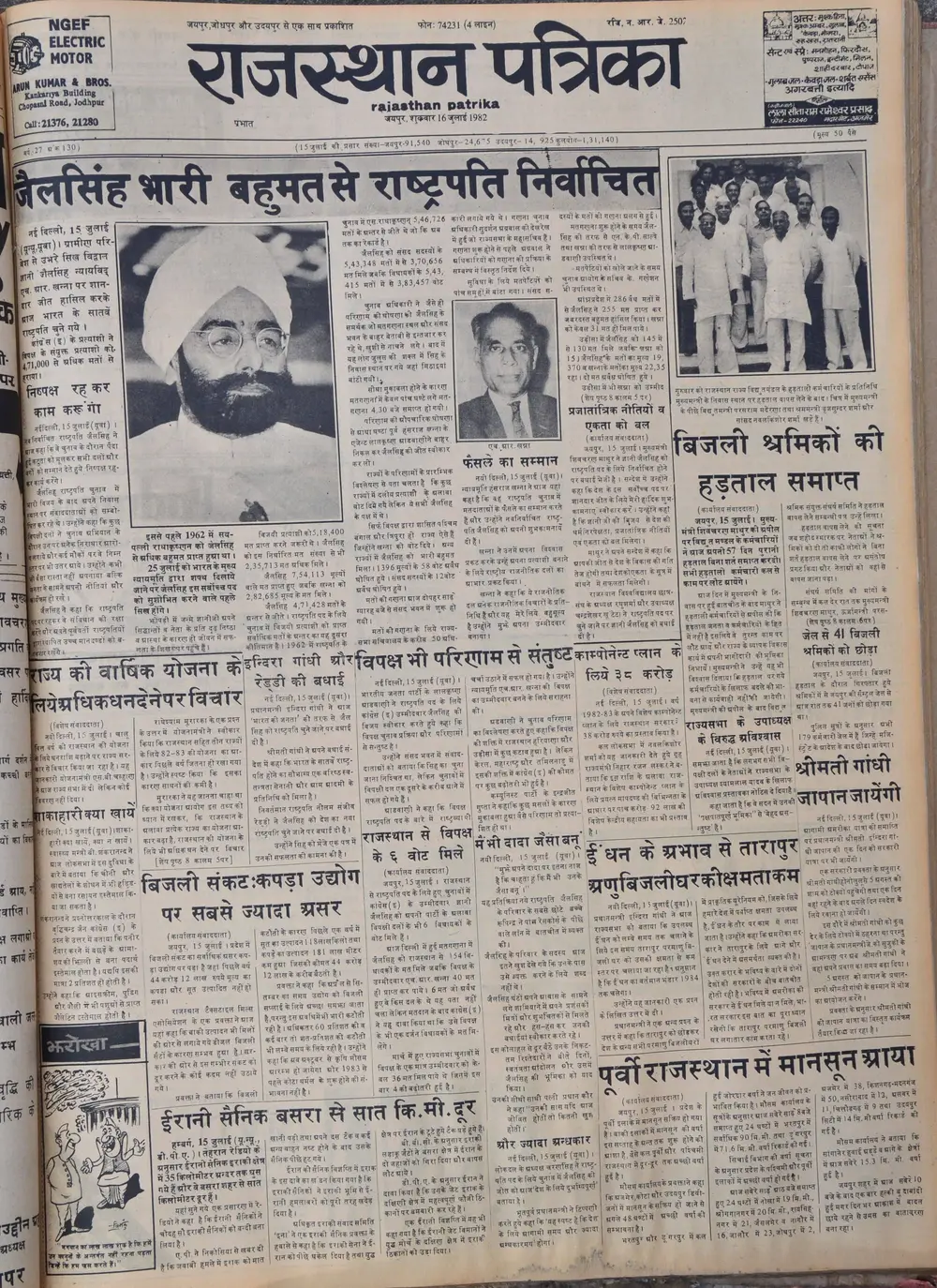
Second Prize for printing and decoration from the Ministry of Information and Broadcasting. In 1983–84 the Bhagwan Das Charitable Trust honoured Patrika for its election reporting from Andhra Pradesh and Karnataka.
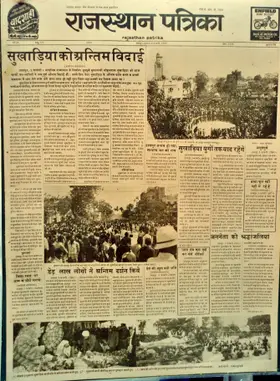
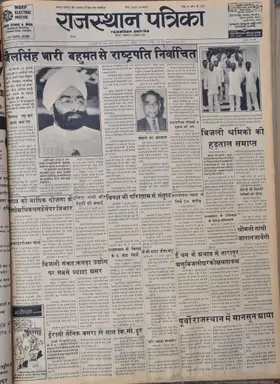
- 1984
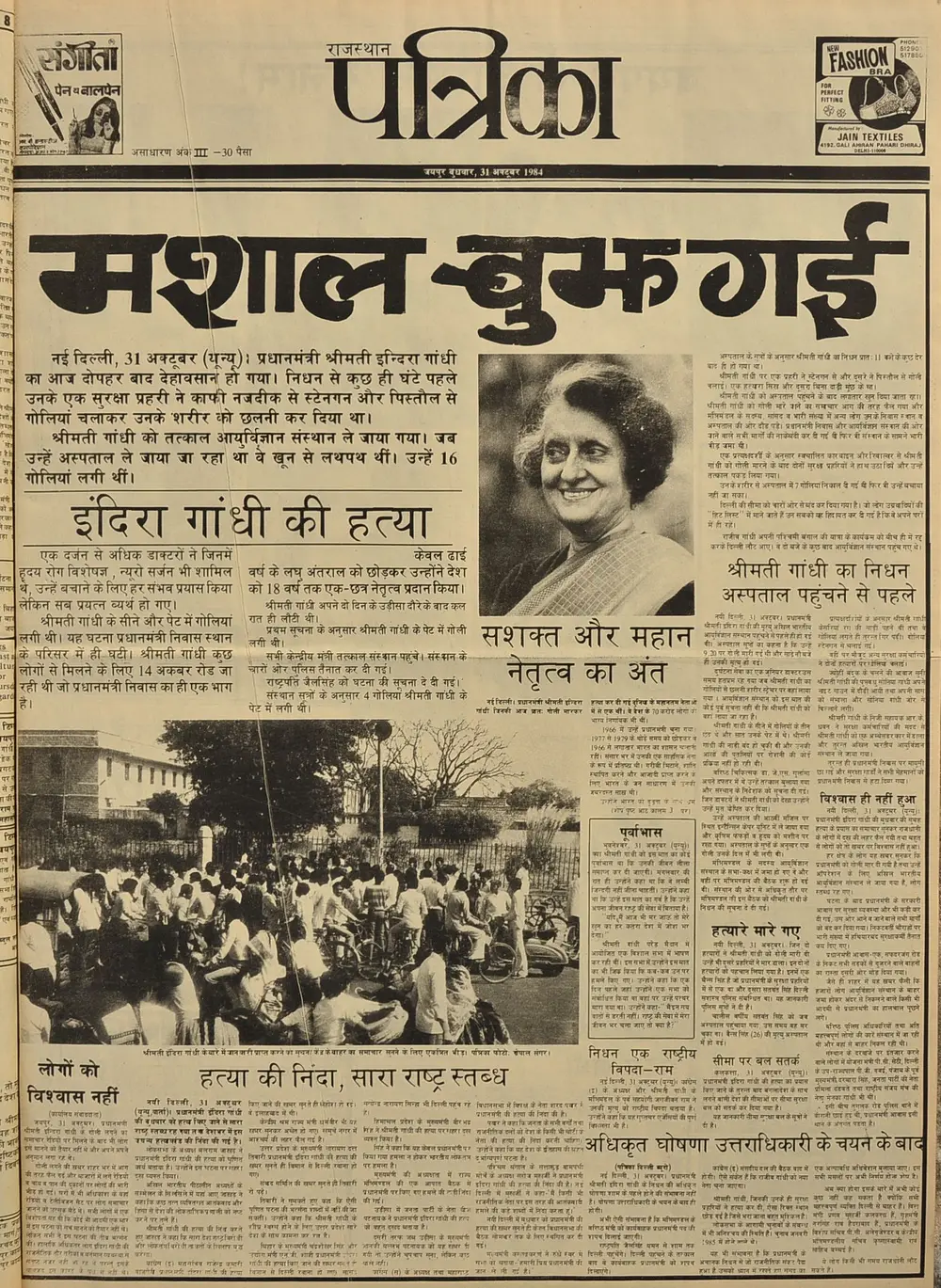
The Jaipur, Jodhpur and Udaipur editions moved to photo-setting, older machines gave way to improved web offset presses, and plans were made for Kota and Bikaner editions.
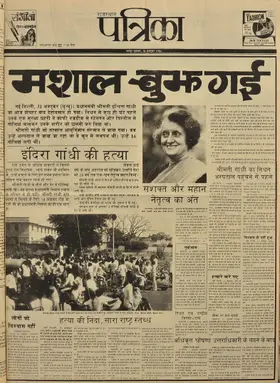
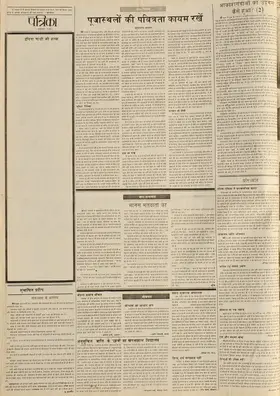
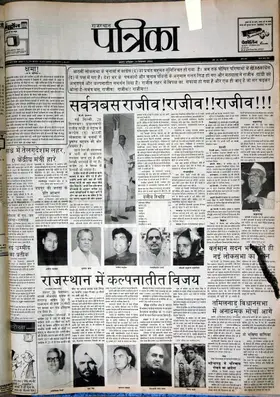
- 1985
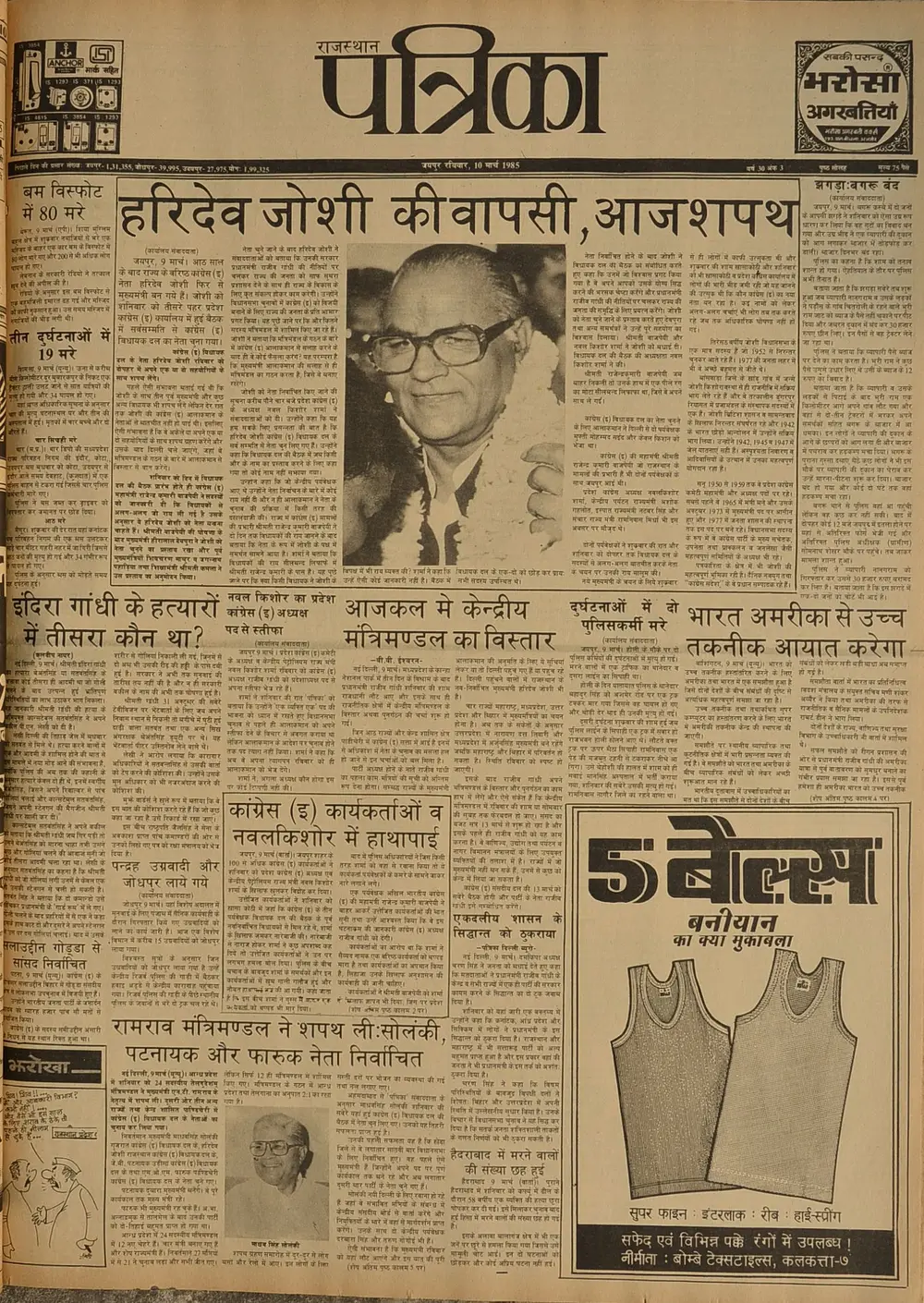
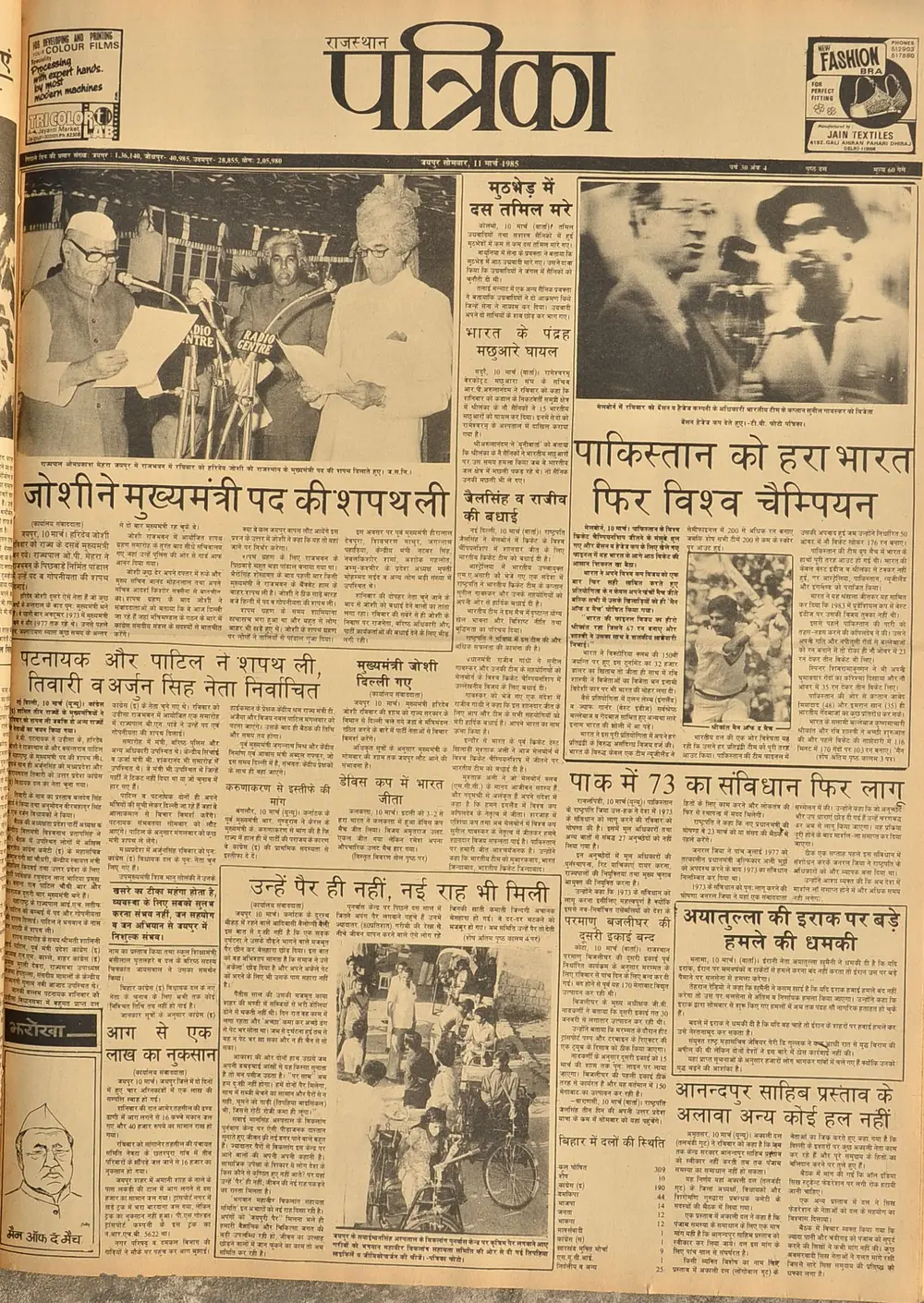
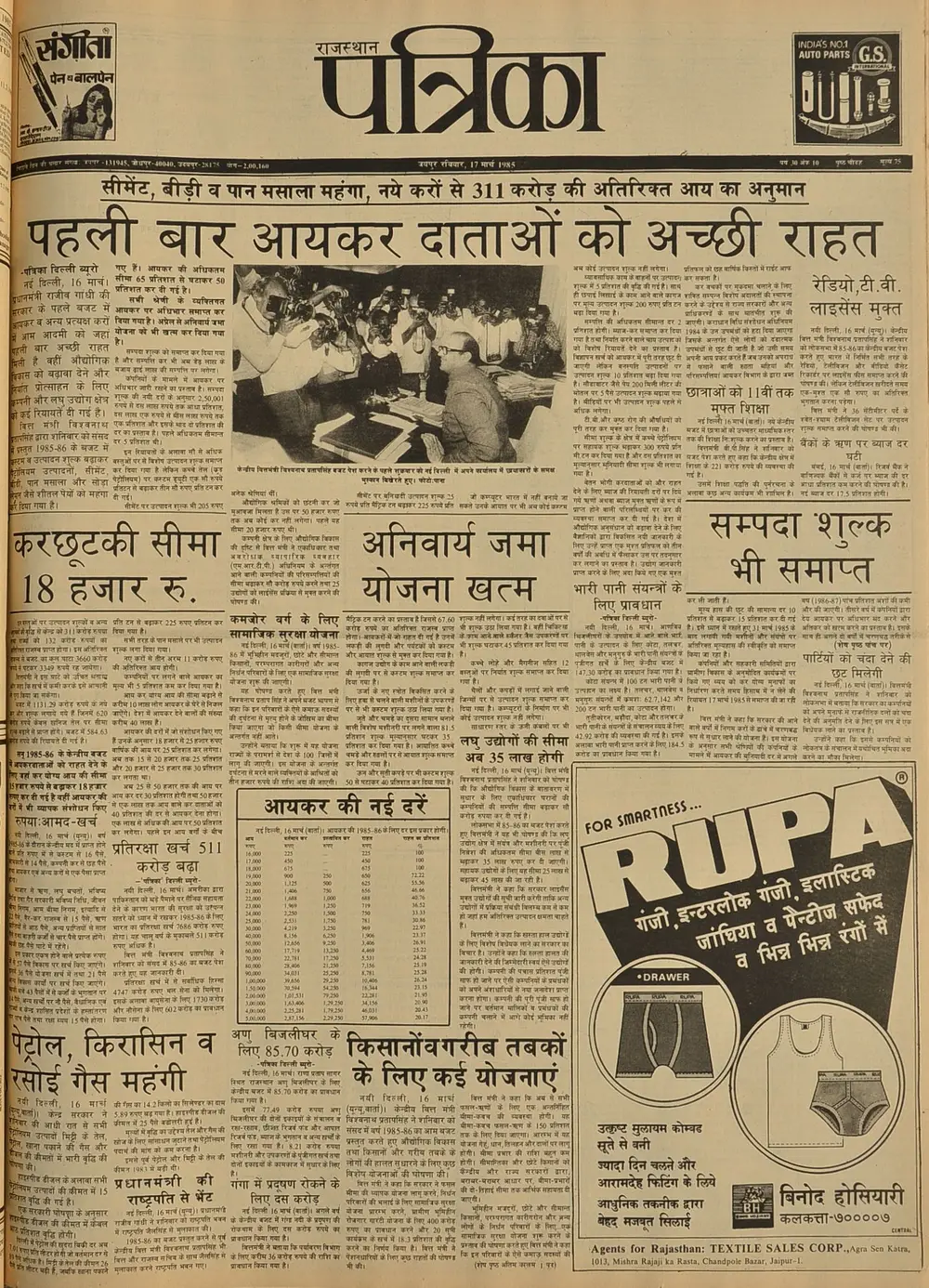
The Jodhpur, Udaipur and Jaipur editions received national awards for design and printing, and readership increased significantly.